
Ductless Mini-Splits vs. Central AC: Which Is Better for Your Verde Valley Home?

When Verde Valley temperatures climb toward triple digits, dependable air conditioning is essential. Your home should be a place of comfort and refuge, not a collection of hot rooms, weak airflow, or unexpected repair concerns.
If you are replacing an older system, remodeling your home, finishing an addition, or adding cooling to a home without ductwork, you may be comparing ductless mini-splits and central air conditioning. Both systems can provide reliable comfort, but they work differently and suit different properties.
Need help choosing? Request a custom HVAC installation quote from Powell Air. We evaluate your home, layout, existing equipment, comfort concerns, and long-term goals rather than recommending a one-size-fits-all system.
The Short Answer
A ductless mini-split is often the better choice when:
- Your home does not have ductwork.
- Existing ducts are difficult or expensive to repair.
- You want room-by-room temperature control.
- You are conditioning an addition, casita, garage conversion, or specific problem area.
- You want one system that can provide both heating and cooling.
Central AC may be the better choice when:
- Your home already has properly sized, well-maintained ductwork.
- You prefer one thermostat and even whole-home cooling.
- You want most equipment hidden from view.
- You want to use a central air filter and existing supply registers.
There is no universal winner. The right system depends on your property and how you use it.
How Ductless Mini-Splits Work
A ductless mini-split uses an outdoor unit connected to one or more indoor units, often called heads. Refrigerant lines and wiring connect the indoor and outdoor equipment through a small wall opening. The indoor unit then delivers heated or cooled air directly into the room.
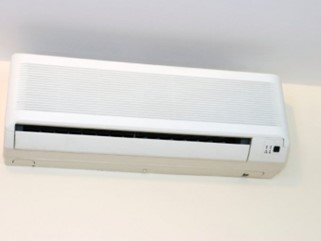
A single-zone system can condition one room. A multi-zone system can connect several indoor units to one outdoor unit, allowing different areas of the home to have individual controls.
Many ductless systems are heat pumps, meaning they provide air conditioning in summer and heating in winter. That can be useful in the Verde Valley, where summer afternoons are very hot but winter nights can still be cold.
According to the U.S. Department of Energy’s Building America Solution Center, ductless systems can be a practical option for homes without suitable ductwork, additions, and homes where zoning is important.
How Central AC Works
Central air conditioning uses an outdoor condenser, an indoor coil, an air handler or furnace, and a network of ducts. The system cools air in one central location and distributes it throughout the home through supply registers.
Central AC is familiar, effective, and convenient when the duct system is in good condition. One thermostat controls the home, and the equipment is generally less visible than wall-mounted mini-split heads.
However, the condition and location of the ductwork matter. If ducts are leaking, poorly insulated, or located in an unconditioned attic or crawlspace, cooled air can be lost before it reaches the rooms. The Building America Solution Center notes that duct-related losses can account for more than 30% of heating and cooling energy consumption when ducts are located in unconditioned areas.
That does not mean every central AC system is inefficient. Well-designed, properly sealed ducts located within the home’s conditioned space can perform very well.
Efficiency: Mini-Splits Often Have an Advantage
Ductless mini-splits avoid the distribution losses associated with ductwork. Instead of sending cooled air through long runs, the system conditions the room directly.
This can be especially helpful when:
- Your ducts run through a hot attic.
- Several rooms have weak airflow.
- Your existing ductwork is old or damaged.
- You only regularly use certain rooms.
- You are adding cooling where extending ductwork would be difficult.
Many ductless mini-splits also use variable-speed inverter technology. Rather than operating only at full capacity and then shutting off, the system can adjust its output as the room’s needs change. This may help maintain steadier temperatures and reduce unnecessary cycling.
Central AC can also be highly efficient, particularly when you choose properly matched equipment and address duct leakage and insulation. Efficiency ratings should be considered, but they should not be the only factor. Installation quality, equipment sizing, duct condition, insulation, thermostat settings, and maintenance all affect real-world performance.
Zoning and Room-by-Room Comfort
Zoning is one of the most noticeable differences between ductless mini-splits and standard central AC.
A typical central system has one thermostat. When the system runs, it usually sends conditioned air through the home’s ductwork. Some homes can use a central zoning system with dampers and multiple thermostats, but this requires additional design, equipment, and installation.
Ductless systems provide zoning through separate indoor units. You can set the living room, bedroom, home office, or addition according to how each space is used.
This may help with:
- West-facing rooms that heat up in the afternoon.
- Home offices that are occupied during the day.
- Guest rooms that are used only occasionally.
- Bedrooms that need different temperatures at night.
- Casitas and other detached or separate living areas.
- Additions that do not connect well to the existing HVAC system.
Zoning does not mean every room needs its own indoor unit. Proper placement is important. A professional installer should consider the layout, insulation, windows, airflow, and the way rooms connect to one another.
Installation and Appearance
Central AC keeps most of the equipment out of sight. You see the outdoor unit and the registers, while the air handler may be located in an attic, closet, garage, or utility area.
Ductless mini-split indoor units are visible inside the home. Wall-mounted heads are common, although ceiling cassettes, floor consoles, and ducted mini-split air handlers are also available. Refrigerant lines and wiring must be routed between the indoor and outdoor equipment.

For a new home or a property with accessible ductwork, central AC may fit naturally into the design. For an older home without ducts, installing a ductless system can avoid major construction and the expense of adding a complete duct network.
The installation should be based on the individual property, not simply the home’s square footage. Equipment that is too large or too small can create comfort, efficiency, and reliability problems. The ENERGY STAR buying guidance for mini-splits recommends proper sizing and points to Manual J load calculations as part of selecting the correct system.
At Powell Air, we provide custom installation quotes based on your home’s layout, needs, and existing conditions.
Maintenance Requirements
Both systems need regular maintenance. Preventive service helps identify concerns early, preserve comfort, and reduce the risk of an inconvenient breakdown during extreme weather.
For a ductless mini-split, you should:
- Clean washable filters regularly, especially during heavy use.
- Keep the outdoor unit clear of leaves, dust, and vegetation.
- Watch for drainage problems or unusual odors.
- Schedule professional service for coil, drain, electrical, and refrigerant checks.
Ductless indoor units may need more frequent filter cleaning than many homeowners expect. The Building America Solution Center notes that standard mesh filters are often cleaned about every two weeks, depending on use and conditions. Dust buildup inside the indoor unit can reduce airflow and performance.
For central AC, you should:
- Replace or clean the central filter as recommended.
- Keep the outdoor condenser clear.
- Make sure supply and return vents are not blocked.
- Schedule regular professional maintenance.
- Have ducts inspected if airflow is weak or rooms are consistently uncomfortable.

Regular maintenance does not eliminate every possible repair, but it gives your system a better chance of operating reliably when you need it most.
Mini-Split vs. Central AC Comparison
| Consideration | Ductless Mini-Split | Central AC |
|---|---|---|
| Existing ductwork | Not required | Required |
| Temperature control | Room-by-room zoning | Usually one thermostat |
| Equipment visibility | Indoor heads are visible | Most indoor equipment is hidden |
| Best for | Additions, casitas, older homes, selected zones | Homes with good existing ducts |
| Heating capability | Many systems provide heating and cooling | Cooling only unless paired with a furnace or heat pump |
| Duct energy loss | Avoids duct distribution loss | Depends on duct location, sealing, and insulation |
| Filtration | Varies by model and filter design | Often supports a central whole-home filter |
| Maintenance | Frequent indoor filter cleaning | Regular central filter replacement |
| Installation | Flexible with less ductwork | Straightforward when ductwork is accessible and suitable |
Which System Is Better for Your Verde Valley Home?
Choose a ductless mini-split if your priority is flexible, efficient comfort without adding ductwork. It may be a particularly good fit for an older home, a remodeled space, a garage conversion, a casita, or rooms that have always been difficult to keep comfortable.
Choose central AC if you already have reliable ductwork and want simple whole-home cooling from one thermostat. Upgrading the central system may be the most practical approach when the ducts are properly sized, sealed, and located within conditioned space.
A combination approach may also be possible. For example, a mini-split can provide targeted comfort in an addition or home office while the existing central system continues serving the main home. The best choice depends on the property and your goals.
Get a Custom Recommendation
When it comes to HVAC installation, the equipment is only part of the solution. Correct sizing, placement, airflow, electrical requirements, refrigerant connections, drainage, and final system testing all matter.
Powell Air is locally owned and has served the Verde Valley community for more than 23 years. We bring more than 20 years of HVAC experience and over 10 years of operating Powell Air to each project. Our team focuses on accessible service, dependable workmanship, practical recommendations, and installations done right the first time.
Do not guess between ductless mini-splits and central AC. Book a consultation with Powell Air or learn more about our custom HVAC installations. We are always here to assist with friendly and reliable support.